How to Start a Vegetable Garden from Scratch
A beginners guide to selecting a plot, preparing the soil, and planting a vegetable garden.
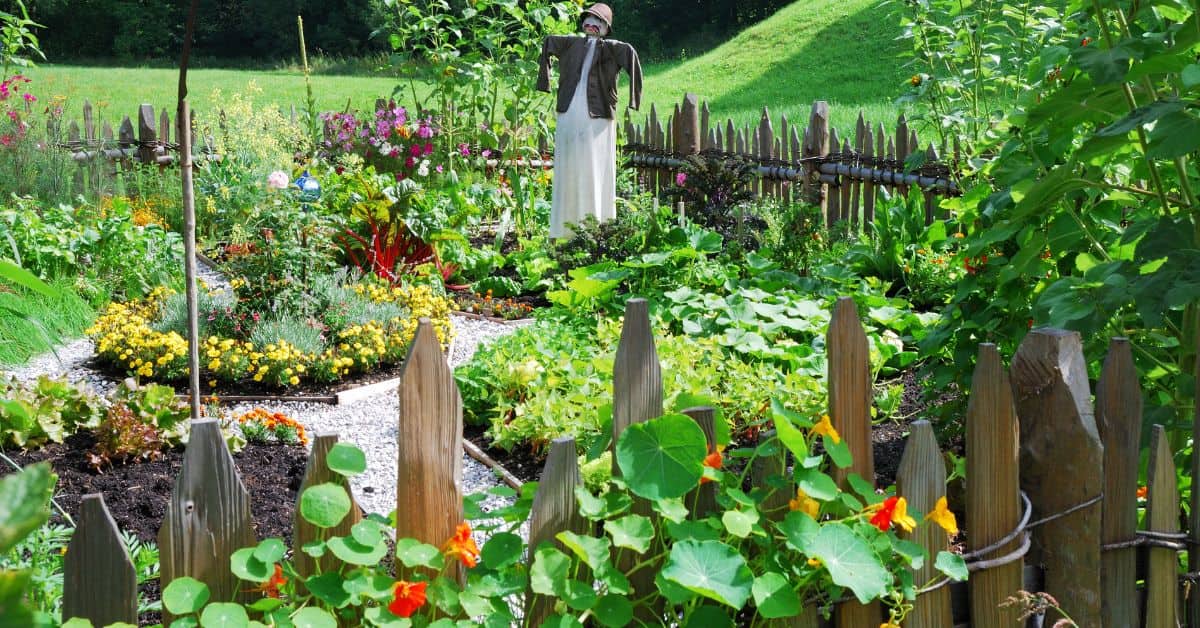
So you’re ready to start a vegetable garden? Growing your own produce is an exciting endeavor! There is nothing quite like the taste of fresh cherry tomatoes, right off the vine! Follow along for tips on how to start a vegetable garden and grow your own food.
Summary of how to start a vegetable garden:
- Choose a location
- Select the vegetables you want to grow
- Map out your garden design
- Prepare your garden plot
- Plant your garden
Choose a Location for Starting a Vegetable Garden:
Find a sunny spot with good drainage
When selecting a garden plot for your new vegetable garden, you will want to consider the hours of direct sunlight in a given area. Take a few days to observe and make note of the sun’s movements, and remember, this will change with the seasons. Most vegetables will require full sun, or an average of 6 hours of sunlight each day.
Drainage is equally important. Avoid areas where water pools after heavy rains. If planting on a slope, you will want to position the rows perpendicular to the slope. Avoid slopes that are so steep that the water will run off and erode the soil.
Make sure your garden plot is easily accessible
Choosing an easily accessible location will set you up for success in tending to your garden and in harvesting the yields. Most important is that the garden is located close to a water source. If watering is a huge hassle, you will likely neglect this essential task, and won’t see much success with your plants’ growth.
Also keep in mind, by placing the garden in an area in which you pass by frequently, you set yourself up for noticing any signs of pests, needs of pruning, and harvests ready for picking in the moments of your daily routine. Part of the job of gardening is watching your plants grow!
Choose the dimensions of your garden plot
Your garden plot can be however big or small you please it to be. However, make sure you plan accordingly with more narrow beds, or pathways, so that come harvest, you can reach all the bounties for picking. Whenever you step down on garden soil, you compact it, making it more difficult for the roots to push through and plants to flourish.
Starting with a small garden plot will allow you to get the hang of gardening without feeling overwhelmed. New gardeners may be surprised with how many vegetables can fit into a small garden space. The concept of square foot vegetable gardening has shown us just how many plants can fit into a single square foot of garden space.
Select the Vegetables You Would Like to Grow

Understand the USDA Plant Hardiness Zone Map
The first thing you will need to find out is what USDA zone you are in. The USDA Plant Hardiness Zone Map is a standard that most gardeners across the globe use, based on the average minimum winter temperatures.
Knowing your USDA zone will help guide gardeners as to what plant varieties will be most suitable for their region. While certain plants are more suitable for various garden zones, we do still have some control over microclimates. For example, tools like shade cloth help us to protect crops that prefer cooler weather as the season warms up. Oftentimes, seed packets will list the hardiness zone on the packaging as well.
Make a list of the vegetables/herbs that you eat the most
Choosing the best vegetables to grow is completely subjective. However, there is no point in growing food that will only go to waste! Grow veggies and herbs that you already use regularly. I would recommend growing your favorite vegetables to eat!
If there are other vegetables that you are not familiar with but would still like to grow, try a few new ones each growing season. One of the perks to vegetable gardening is that you have so much more access to different varieties! You can browse your local nursery, or look at the plethora of vegetable seed varieties offered online.
Categorize your plant picks by growing season
With your list of preferred veggies in mind, categorize these plants according to your growing season. Generally, there are cool season crops and warm season crops. When the weather heats up in late spring, we can plant tomatoes, summer squashes, cucumbers, and corn! As the season wraps up, fall is the time for pumpkins and gourds. The winter carries us through with leafy greens, broccoli, and root veggies that prefer the cooler weather.
Map Out Your Garden Design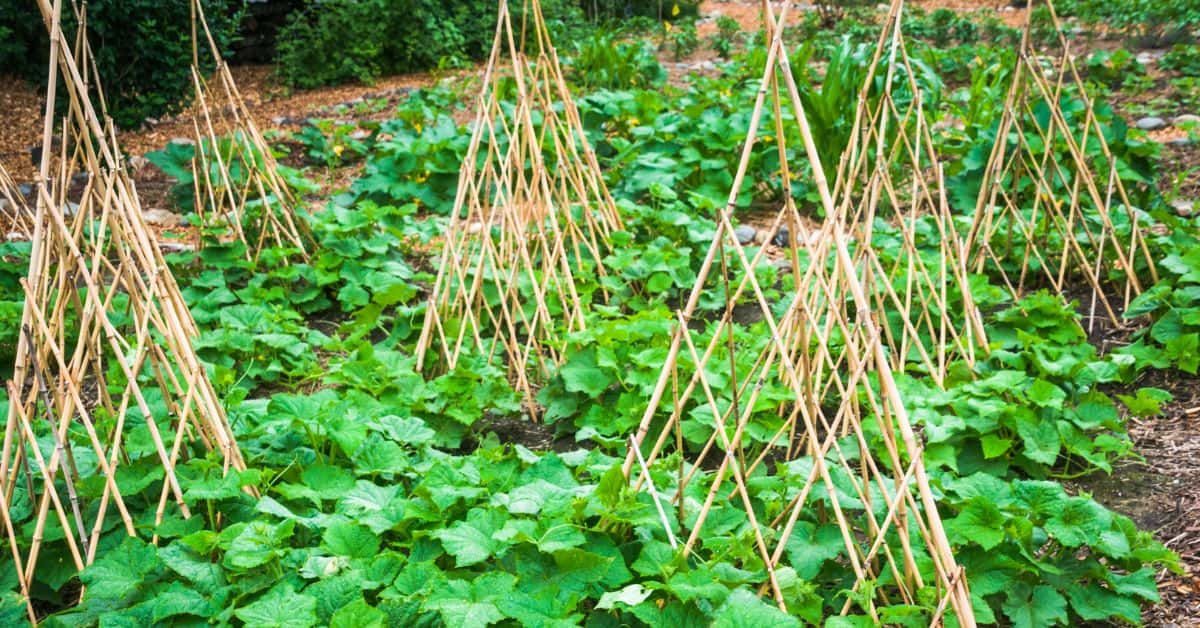
Calculate the space needed for each of your desired vegetables
Get to know the spatial requirements for each of your desired vegetables. Some will grow tall and require support, such as tomatoes. Others can be planted succinctly in tight rows, such as beets or lettuces. There are also vining crops that will grow vigorously and sprawl out freely (if you let them). Spatial requirements can be found on the back of seed packets or on the labels in transplant containers. Different varieties of plants may have different spatial requirements.
Determine your vertical growers
Grow vertically to save on space! This will also reduce disease as air can pass more freely between the vines. Harvests are reached more easily, rather than becoming buried in a tangle of vines.
Reserve the north side of your garden beds for plants that require trellises or that grow taller and will cast shade. Adding height, whether by trellising vines or using plant varieties that naturally grow taller, will create more visual interest as well.
There are a number of plant varieties that you would be surprised to know grow vine-like! Some of these include indeterminate tomatoes, cucumbers, and melons! There are countless ways to create vertical growth systems.
Consider Companion Planting
Companion plants are plants with complementary characteristics. Adding these to your vegetable garden can help deter certain pests, attract pollinators, and even improve the flavor of your crop yields!
They can be mutually beneficial in other ways too, as is exemplified in the three sister’s trio –corn, beans, and squash. The corn grows tall, creating a support for which the beans to grow on. The beans are nitrogen fixers and add important nutrients back into the soil. Finally, the squash sprawls low to the ground, acting as mulch to hold in the soil moisture and suppress weeds.
While certain vegetables grow well together, flowers and herbs also make wonderful companions! Studies have shown that growing strawberries near borage improves the taste of the strawberry! Marigolds are known to help deter slugs, and nasturtiums attract aphids, thus keeping them off of your prized vegetable plants.
Prepare Your Garden Plot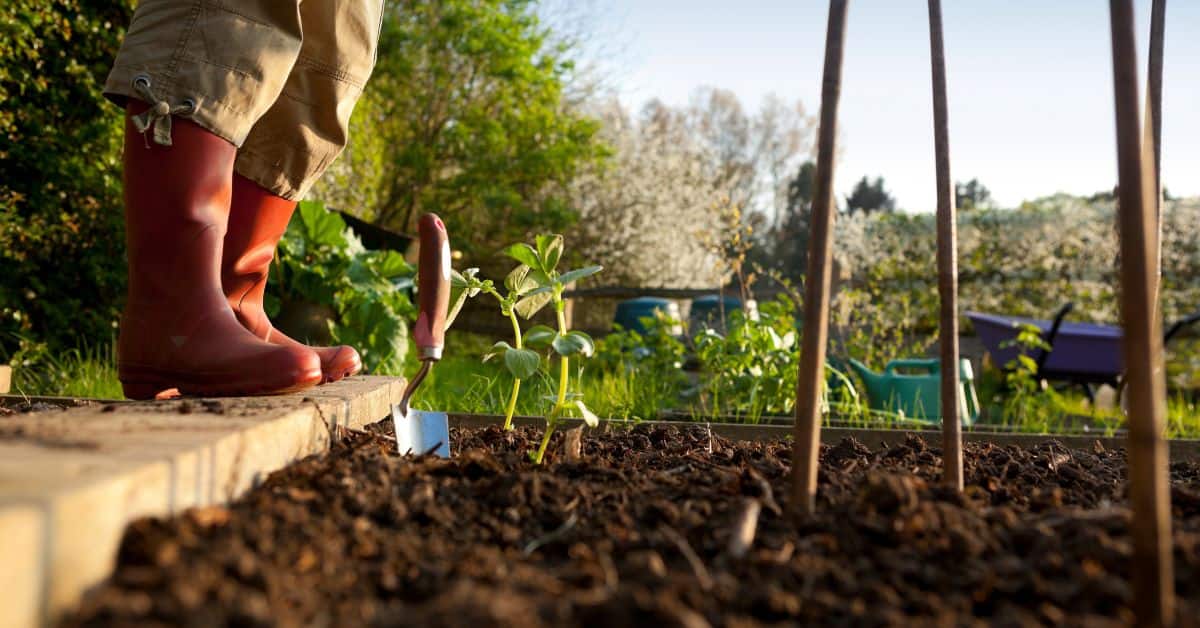
Amend the Soil
Whether you’re growing in the ground, a raised bed, or container gardening, the quality of the soil is essential to the success of your new vegetable garden. There are many reasons to grow your food directly in the ground, including lower costs, better temperature regulation, and increased water retention.
This might sound like a back-breaking task if your current soil is of poor condition or your potential garden plot covered by grass or weeds. However, no-till gardening, also known as lasagna gardening or sheet mulching, uses alternating layers of carbon-rich material (cardboard, newspaper, straw) and nitrogen-rich materials (compost, manure) that break down overtime for the perfect soil composition in your vegetable garden.
My Experience of Lasagna Gardening
When creating my first vegetable garden, I was dealt with heavy clay soil covered by Bermuda grass and weeds. I was also on a budget and knew that building raised beds and buying amended soil was out of the question. To create my no-till garden, I ended up sourcing local materials – recycled boxes, free compost from my local greenery, and a $10 bale of straw were all it took!
While lasagna gardening is ideally done in the fall before the rains (moisture will help to break down all the materials), I had a late start in my first year. It was early spring by the time my beds were complete, and I was worried that it would be too late to grow anything for the upcoming summer in my new vegetable garden.
Many gardeners have mixed opinions on how long the materials need to break down, but I decided to go forward with directly sowing seeds. I planted wildflowers and sunflowers first! As summer came, I transplanted my vegetables. I also directly sowed carrots.
While the flowered and transplanted vegetables did great, I found my soil was not quite airy enough to successfully grow beets and carrots. While the plants sprouted, the roots weren’t quite able to push through the denser compost and grow to full size. It was a lesson learned, and I continued to add organic matter to my soil so that I would be better suited for the next year’s seasons.
Set up a Drip Irrigation System
While by all means you could water by hand, I highly recommend setting up a drip irrigation system. Vegetable gardens with drip irrigation systems also tend to be more water-efficient. It also helps prevent certain diseases that occur with overhead watering.
By watering with a drip line at the base of the plant, the water is concentrated by the roots, where the plant can get to it. There is little water wasted from run off or excessive evaporation, as well as little water wasted on growing weeds in other parts of your bed! Further, with a drip irrigation system, you can give plants a much deeper water. This will encourage the roots to grow further down in the soil, creating healthier, more resilient plants.
If you were only to water the surface, the root systems would not develop as fully. While it may sound intimidating to set up, it really is quite easy! In the long run, it will save you tons of time and money!
Finally, Plant Your Garden!
Directly Sow Plants
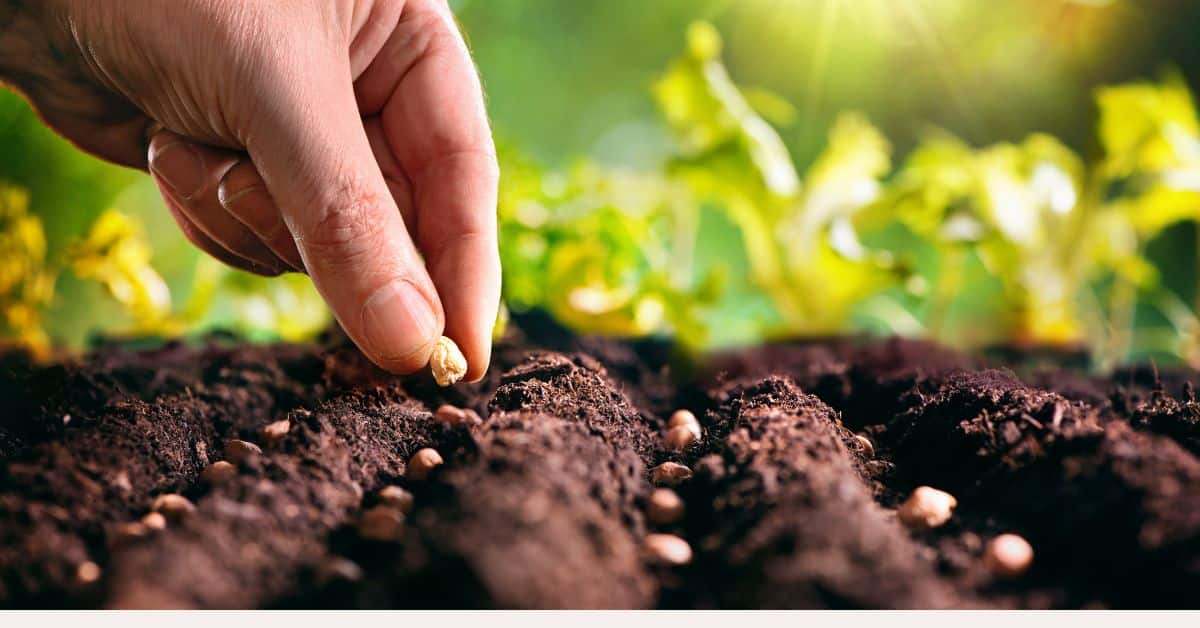
Now this is the fun part! While starting plants from seed may seem a little daunting if this is your first garden, I highly recommend exploring this as an option. Certain plants such as pole beans actually prefer to be directly sown from seeds as the shock of transplanting can be too much for them.
Growing your own veggies from seed also greatly increases the selection available to you for growing a more interesting variety of crops in your vegetable garden. Most tap-rooted vegetables, such as carrots, beets, and radishes, prefer to be directly sown. Other crops that do well include corn, beans, squash, melons, and cucumber.
Plant veggies according to the directions on the seed packet label – pay special attendant to planting depth spacing. Most will instruct you to gently push the seed into the soil, then cover lightly with soil. Water regularly after seeds are planted to ensure proper conditions for germination. You want to ensure that the soil stays damp, but not soaked as this will drown or rot your seeds.
Transplant starters
Vegetables that grow very slowly from seed often prefer being transplanted to the garden once they have developed in more controlled conditions. Common vegetables that prefer to be transplanted from established starters include celery, eggplant, peppers, broccoli, and tomato. Growing seeds in starter trays indoors or outside once the dangers of frost have passed is a great way to give your plants a head start.
There are a variety of seed-starting kits that can be purchased, but it is just as easy to set up your own system. I tend to recycle containers from previously purchased transplants, and I use a tray underneath so that I can water from the bottom. You can create a “mini greenhouse” by covering the container with plastic wrap or a clear lid as the seeds germinate.
Be sure to poke holes or allow for some sort of ventilation so that air can come in. After the seedlings develop, you will want to bring them outside for a few hours each day to harden off. This helps the young plant not to be shocked when transferred from the more stable indoor environment to the more volatile outdoor conditions.
Transplants can also be purchased at a nursery, though this tends to be a more costly option and there is often limited selection. Let’s face it – ever since the pandemic hit, vegetable gardening became a “thing.” Plants are more costly than ever, so starting from seed and learning how to save seeds at the end of the growing season will save you tons!
There are also a number of community groups that are willing to share or trade seeds and start transplants. Local gardening Facebook pages are a good place to look for this. Remember, be sure to contribute back to these communicates if you are planning to use them as a resource.
Mulch, mulch, mulch!!!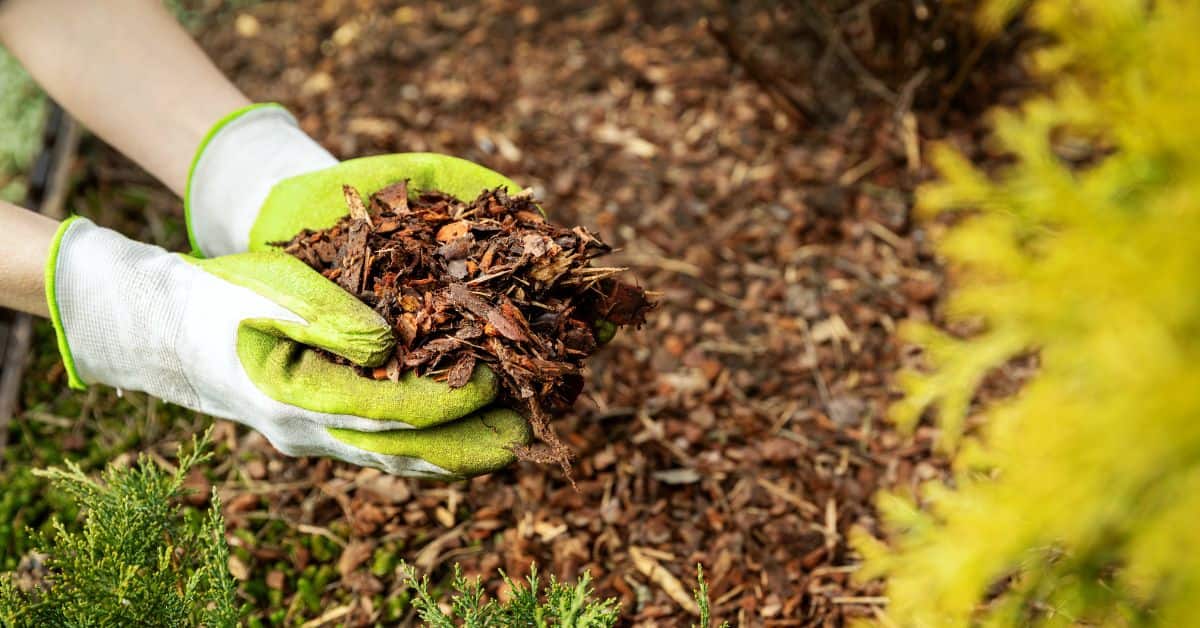
The last step for successful growing is lots and lots of mulch. You can add mulch around seeded vegetables after they have grown to a few inches. Mulch is crucial in vegetable gardening as it suppresses weed growth and preserves moisture in soil .
There are a number of materials you can use, including wood chips, straw, and fallen leaves. Don’t skimp on this step – over time, the mulch will break down in your garden beds, recycling nutrients back into the soil.
Water and Watch Grow
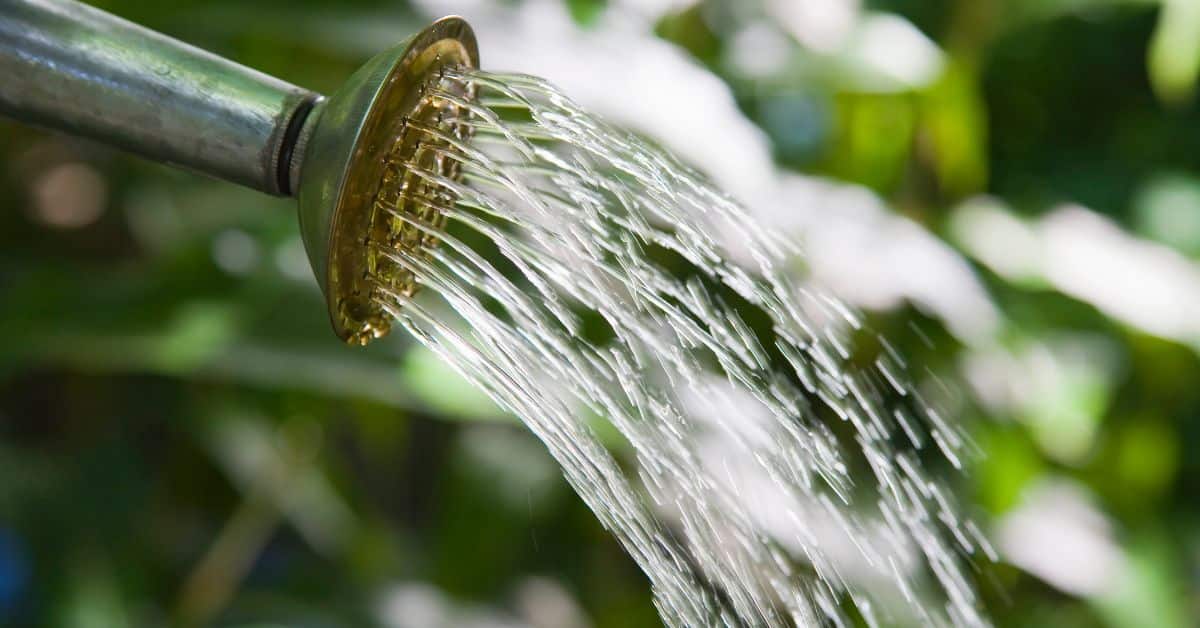
Now that your vegetable garden is established, water well and watch it grow. It will take time learning when to harvest, or where to prune. You will not get everything perfect in your first season. However, this knowledge will build up with practice and patience! We hope you enjoy this new hobby!

Nice blog here! Also your website loads up fast! What host are you using?
Can I get your affiliate link to your host?
I wish my website loaded up as fast as yours lol
Thank you! Of course- I use BigScoots. You can use my affiliate link here: https://www.bigscoots.com/portal/?affid=2362
Good luck with you website!
Greetings! Very useful advice within this article! It is the little changes that will make the greatest changes. Many thanks for sharing!
Thanks for your blog, nice to read. Do not stop.
Good post!
Thank you!